Here's a reality that every mobile team knows: where your builds run matters just as much as how they run.
You can optimize your pipelines, implement caching, parallelize your test suites, and still hit a ceiling. Sometimes that ceiling is raw compute power. Sometimes it’s latency. And sometimes it’s that your code is crossing an ocean every time someone pushes a commit.
Today, the Bitrise EU data center is live, bringing next-generation Apple silicon and AMD EPYC Zen5 compute to Europe. This means faster hardware, smarter global distribution, and a solid foundation for data sovereignty options going forward. Let’s dive in!
What the EU data center means for your team
A step toward data residency. Your codebase can now stay in the EU throughout the build process. Whether your organization has data sovereignty requirements, or if you just prefer using regional infrastructure, this is an important milestone. This launch is the foundation for full data residency capabilities, coming early next year.
Better performance. Our EU data center runs on top-of-range hardware: M4 and M4 Pro Mac Mini machines for iOS builds, AMD EPYC Zen5 for Linux builds. These upgrades deliver measurably faster compile and test times.
Improved availability. Adding a third region increases global capacity and provides geographic redundancy. For you, that means instant access to build machines and zero queues. And if something goes wrong in one region, your builds automatically keep running in the other.
How it works: global distribution, local options
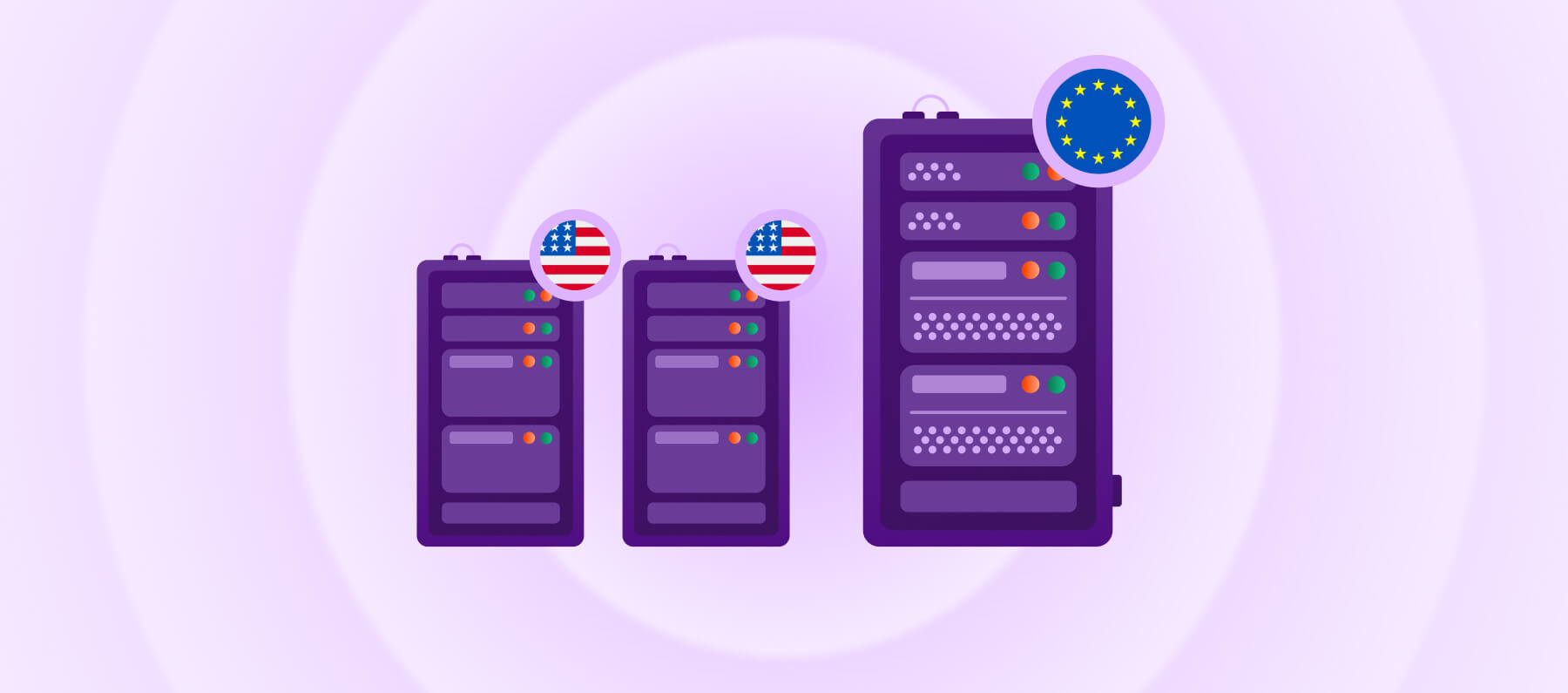
Here is the practical bit: Bitrise can now distribute builds across three data centers, two in the US and the new EU location. This multi-region experience is already available to some customers, and we’ll continue to roll it out in the coming months. When the global option is enabled, your builds automatically find available resources. No configuration changes needed. No migration projects. Just faster builds.
But what if you need more control? Enterprise customers can lock builds to a specific region. Contact your Customer Success Manager to discuss your options.
- EU-only: Builds and code stay in Europe
- US-only: Builds and code stay in the US
- Global: Bitrise optimizes for speed
EU deployment options for Enterprise customers
For some teams, "code can stay in the EU" needs to be "code must stay in the EU." We get it. That’s why Enterprise customers can choose from three available Build Platform options.
Public build platform. Shared EU infrastructure with standard isolation. If you need a regional setup without additional security requirements, this is the most straightforward and cost-effective option.
Dedicated build platform. Dedicated machines behind the Bitrise firewall, reserved for your exclusive use during builds. Need tighter network security? There's an option for dedicated IP ranges too.
Private build platform. Machines reserved for you at all times, with your own firewall, flexible storage and compute setup, custom virtualization, and site-to-site VPN. This is the ideal option for teams with tight security and compliance requirements.
We are working with early customers on pricing and configurations for these options. If EU-only deployment is on your roadmap, message us.
Overview of Apple silicon machines
The EU data center is equipped with M4 Pro Mac mini machines and standard M4 Mac mini types. The M4 Pro is the flagship for demanding workloads, delivering the highest performance tier for iOS CI/CD, with more cores and memory bandwidth. These machines excel at parallel test execution and complex workflows. The standard M4, with its 10 cores (four performance cores and six efficiency cores), handles the majority of iOS workflows, providing excellent performance and maintaining efficiency.
Apple silicon benchmark results
We used the open-source XcodeBenchmark app with Xcode 26.0.1 to measure iOS compilation performance. Want numbers for your specific codebase? Reach out to us to measure performance on EU DC machine types.
Overview of Linux machines
For Android, builds in the EU data center are powered by AMD EPYC Zen5 processors. This is a meaningful upgrade over previous generations, with improved memory bandwidth, higher IPC, and better power efficiency.
Our portfolio includes eight Linux machine types to cover a range of price-performance needs. Enterprise customers can also request custom configurations anywhere from 4 vCPU to 192 vCPU.
To find the best price-performance option for your pipelines, check out our build machine documentation.
Linux benchmark results
Zen4 in our US DCs already delivered a significant performance boost. Zen5 in the EU DC takes it further, cutting Android compilation times by 20% or more. We measured the difference using the open-source PocketCast Android app, recompiling with the --rerun-tasks Gradle flag on the Ubuntu 22.04 Bitrise stack.
See how Bitrise Zen4 and Zen5 compared to GCP compute-optimized machine in the table below.
Want benchmarks for your specific codebase? Reach out to us to measure performance on EU DC machine types.
What all this enables for your teams
Faster feedback cycles. Lower latency plus next-gen hardware means shorter round trips from commit to build result.
Better performance everywhere. Even if you never touch your regional settings, you benefit from expanded global capacity and modern machines.
Codebase in-region during builds. With public, dedicated, or private build platform options for Enterprise customers, your codebase does not leave the EU while your builds run.
Ready to get started?
Enterprise customers: Contact your Customer Success Manager to discuss EU deployment options.
Not on Enterprise yet? Contact us to learn more about accessing EU data center capabilities and the latest hardware for your mobile CI/CD.
New to Bitrise? Book a demo to see Bitrise in action.
Get started for free
Get a 30-day free trial and join the 400,000+ mobile developers who already love Bitrise.
Start free trial