The DevOps platform built for mobile
Take the pain out of every stage of your mobile build-test-release cycle, so your teams can focus on shipping great apps.
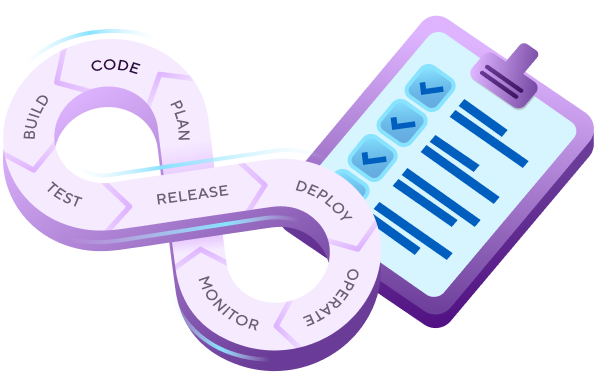

There are dozens of CI/CD tools out there. Only one is built specifically for mobile.
From your first commit to your newest release, Bitrise brings speed, reliability, and mobile-first tooling to every stage of app delivery. No scripting workarounds. No abandonware. No waiting weeks for tool support after every Xcode update. Just one simple out-of-the-box solution.


What mobile-first actually means
Bitrise handles all the complexities of mobile DevOps, and you’re in the driver’s seat. Our platform adapts to your velocity, budget, and security needs, and scales with you as you grow.

Speed
Keep your team in flow with intelligent parallel pipelines, co-located caching, and self-healing builds, all running on high-performance Apple silicon and Linux infrastructure.

Simplicity
Mobile-first tooling straight out of the box. No complex setup, zero maintenance, and new Xcode within 24 hours. So your team can focus on building apps instead of tool integrations.

Reliability
Build with confidence, not crossed fingers. Get 99.9% uptime guaranteed, support from mobile experts, and enterprise-grade security, trusted by teams in healthcare, finance, and retail.
Speed and simplicity at every stage of the mobile journey
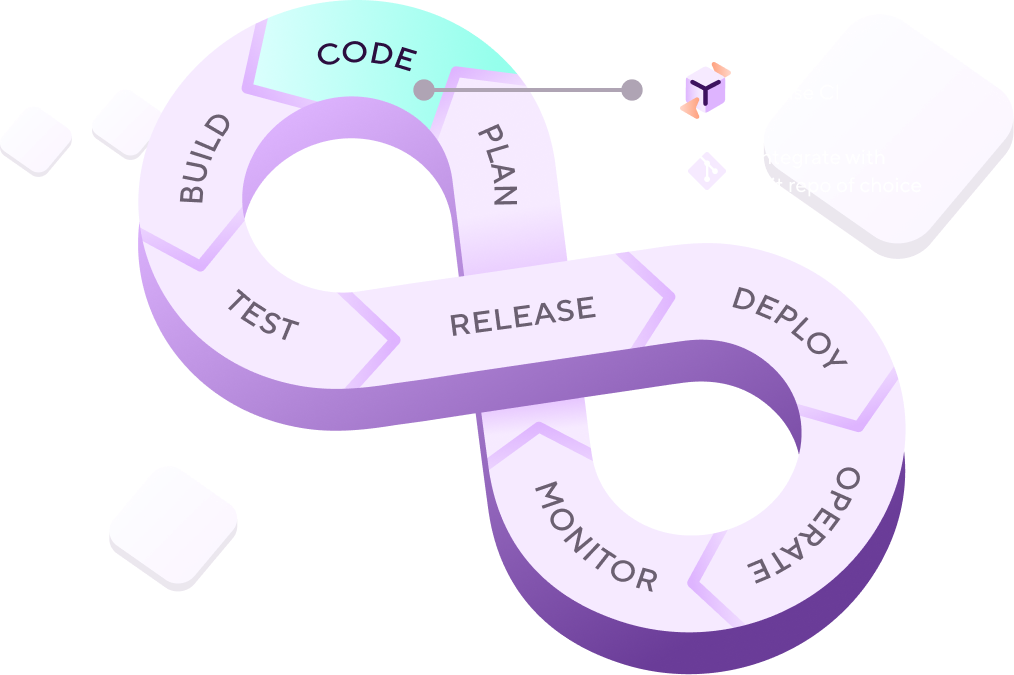
Native support for your SCM
- Integrate with GitHub, GitLab, and Bitbucket
- Tokenless authentication for GitHub App
- Run builds locally with CLI
- Webhook-triggered builds on PRs
- Context-driven AI code reviewer
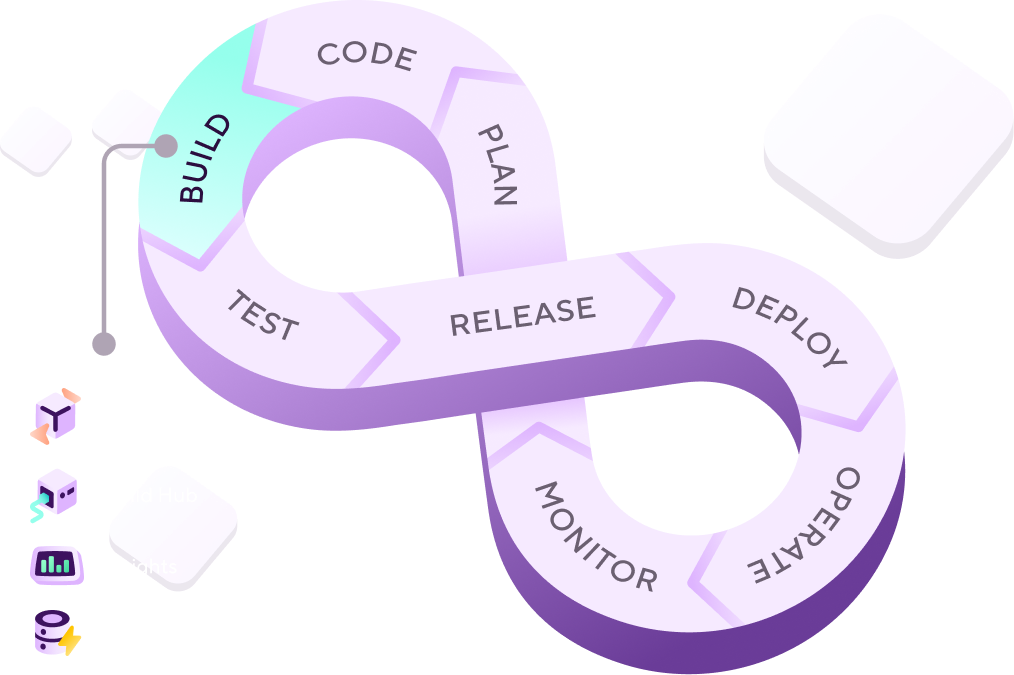
Zero maintenance CI/CD infrastructure
- Fast, scalable build machines (M4 Pro and x86 Linux)
- Fully-managed mobile toolchains
- New Xcode within 24 hours of release
- Drag-and-drop YAML-based pipeline editor
- 400+ secure and curated mobile Steps
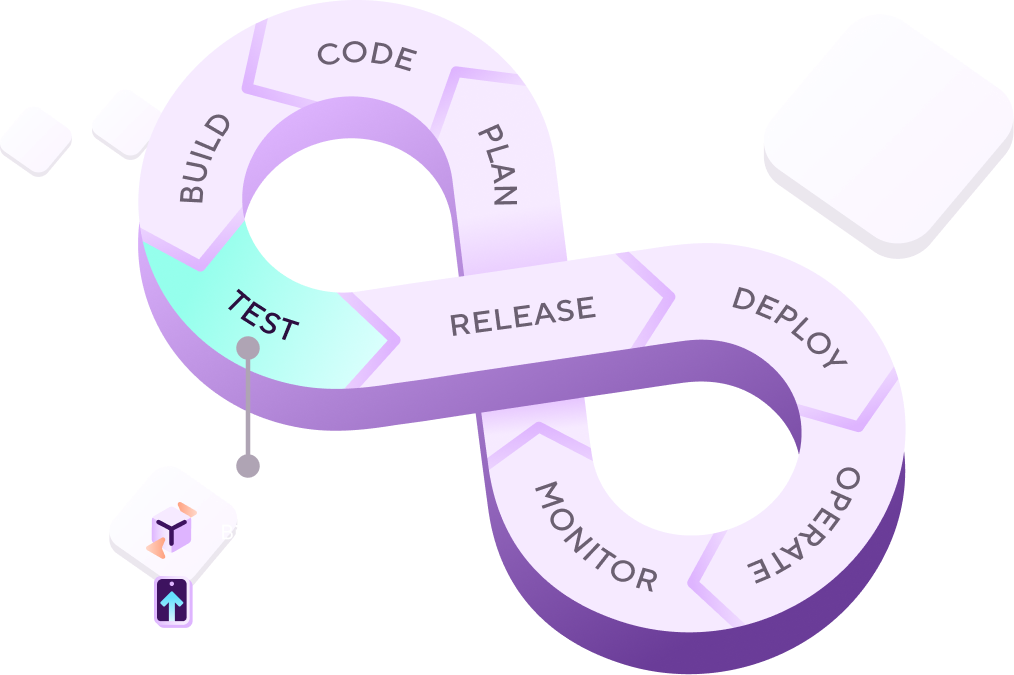
Comprehensive mobile QA
- Built-in code scanning and flaky test detection
- All mobile test reports on a single page
- Support for unit, UI, and real device testing
- Firebase Test Lab included at no extra cost
- Native iOS simulator support
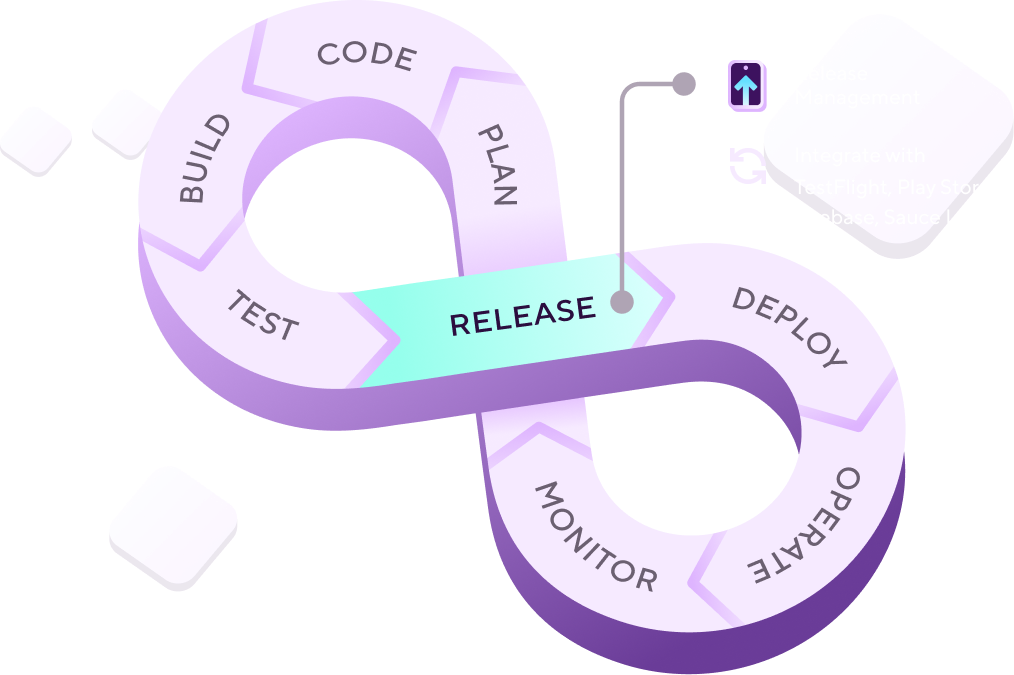
One unified interface for releases
- Automated App Store and Google Play publishing
- CodePush for React Native
- Simple metadata management
- Phased rollout automation and rollback triggers
- Optional manual approval gates for final release
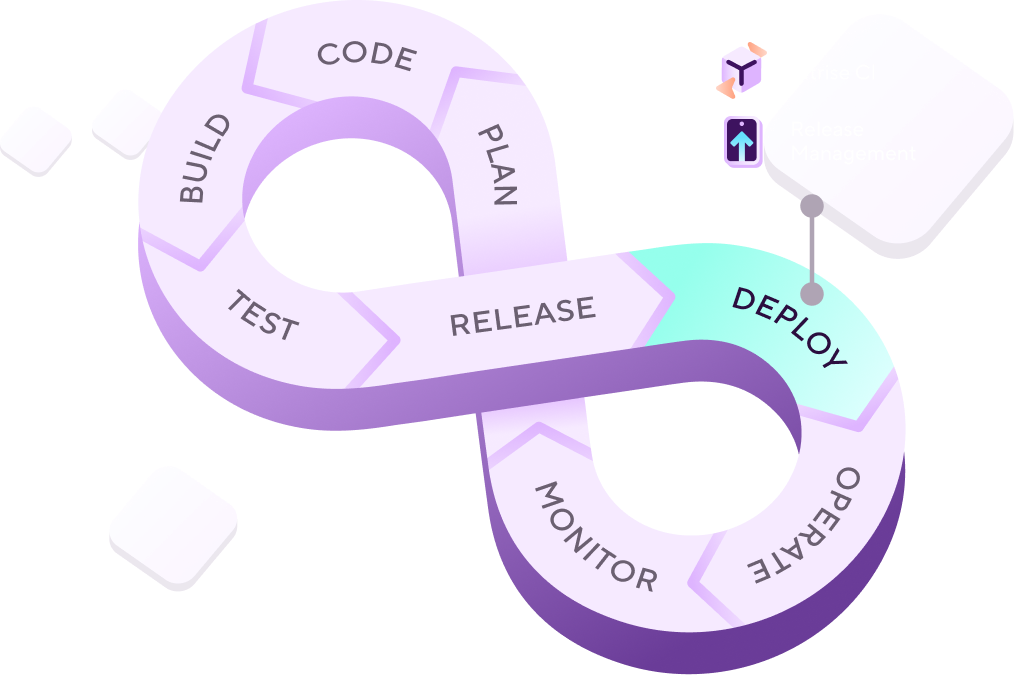
Simple artifact preparation and signing
- Automated iOS certificate renewal and profile provisioning
- Automated code signing for iOS and Android
- Deploy to anywhere (deployGate, TestFlight, Google Play Console)
- Over-the-air artifact distribution via public/private links
- Easy version comparison and rollbacks
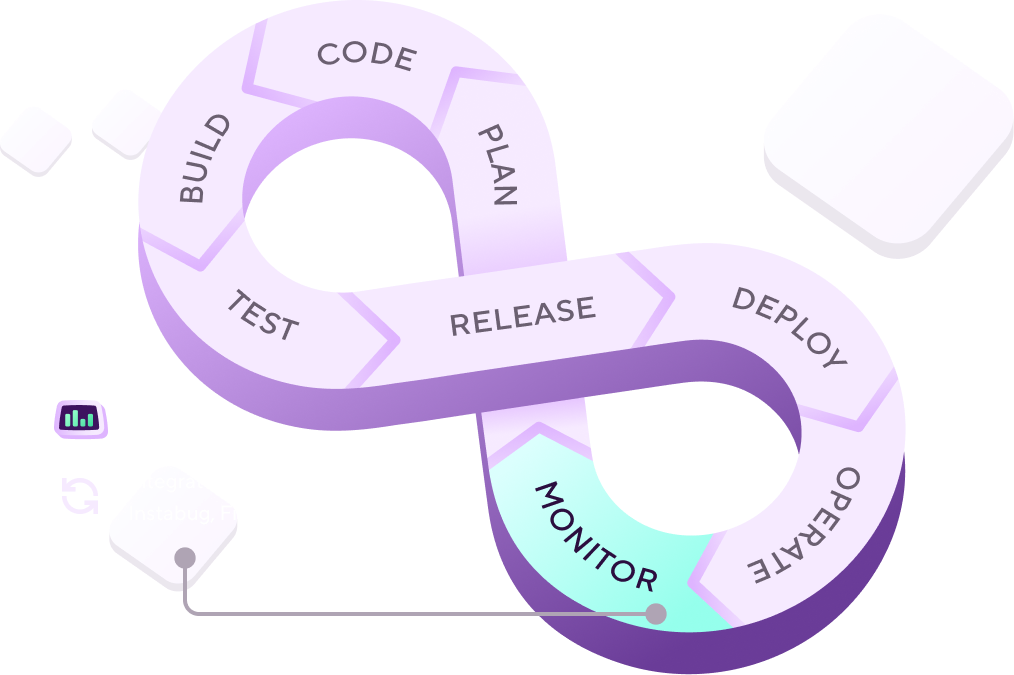
Speed up CI/CD with build insights
- Granular data for every step of your CI pipeline
- Key stats on build time and failure rates
- Quickly pinpoint and resolve bottlenecks
- Auto-flags and quarantine for flaky tests
- Easily monitor and optimize credit consumption
Why mobile teams choose Bitrise
Bitrise handles all the complexities of mobile DevOps, and you’re in the driver’s seat. Our platform adapts to your velocity, budget, and security needs, and scales with you as you grow.

"With Bitrise, we've unlocked the equivalent of four engineers' worth of time. It's really helped to ease the pressure on the team and given us time back to focus on other priorities."


"With Bitrise, stability is no longer a concern. The uptime has been fantastic, to the point where we don't even think about it any more."


“The support from Bitrise has really stood out. It feels like we’re one team focused on solving problems. “


“My focus as an engineer needs to be on delivering features and improving our product. Bitrise gives me the time to do that.”


“Quality isn't something you sprinkle on at the end. With Bitrise, we have a solid foundation that allows us to embed it throughout the process.”

Ready to ship mobile apps faster?
Talk to an expert
Get a platform tour and see Bitrise in action with your specific use case.
Start a 30-day free trial
Get building right away with our self-serve option.
Explore our documentation
Dig deeper on implementation details.
Read success stories
Discover how teams like yours succeed with Bitrise.

Frequently Asked Questions
What is DevOps?
DevOps stands for “development operations”. DevOps is best understood as a set of work practices that grew out of the need to connect the silos of software development and IT operations. The work of a DevOps engineer typically focuses on automating, standardizing, and integrating processes across all the teams in an organization and across the entire development lifecycle. As a methodology, DevOps takes an end-to-end view of software development, builds in mechanisms for collaboration across teams, and fosters a culture of shared responsibility for the quality, security, and speed-to-market of new products and features. You can learn more in our guide to DevOps and CI/CD in mobile development.
What is the difference between CI/CD and DevOps?
CI/CD is the technical process that enables the goals of DevOps. CI/CD refers to the specific set of tools and processes that allow engineers to automate and accelerate software development and release. DevOps encompasses CI/CD, plus the broader practices and culture that enable development teams to ship code fast without compromising on quality or consistency. DevOps engineers are typically responsible for setting up and maintaining CI/CD pipelines. However, companies that don’t have dedicated DevOps engineers will often use platforms like Bitrise to create robust CI/CD pipelines without needing deep infrastructure or DevOps knowledge.
What does CI/CD stand for?
CI/CD stands for “Continuous Integration and Continuous Delivery/Deployment”. Basically, CI/CD is an umbrella term for all the practices and tools that automate the process of building, testing, and deploying new code.
What is a CI/CD pipeline?
A CI/CD pipeline is a series of chained workflows that automate the path from code commit to production. Every time a developer commits their code, the pipeline is triggered and the code is automatically run through a standard set of tests and quality checks. With Bitrise, you can quickly build a complete CI/CD pipeline by assembling your workflows from our 400+ mobile-optimized Steps and then chaining these together in a pipeline, all using our simple drag-and-drop editor.
Why is CI/CD important?
CI/CD allows developers to ship quality apps faster, speeding up development without compromising on code quality. A strong CI/CD pipeline will catch bugs early, reduce manual errors, shorten feedback loops, and create shared standards across teams and products. This leads to fewer deployment errors, more consistent releases, and better collaboration. Strong CI/CD is particularly important in mobile development, due to the complexities of managing specialized tools and build environments, meeting iOS and Android requirements, and running tests on a wide variety of real devices and emulators.
Why is DevOps more complex for mobile?
Mobile development has unique complexities that generic CI/CD tools weren't designed to handle, such as:
- Specialized build environments. iOS and Android each require specific toolchains and dependencies that need constant updates, especially with Apple's frequent Xcode releases.
- Code signing. Managing certificates, provisioning profiles, and device registrations is complex and error-prone, and can break your entire build if configured incorrectly.
- Testing. Validating across dozens of device types, OS versions, and screen sizes is exponentially harder than testing across browsers on the web.
- App store deployment. Navigating Apple's App Store Connect and Google Play Console, managing metadata and screenshots, and coordinating phased rollouts adds layers of manual work and context-switching.
All of this creates friction that slows teams down and pulls engineers away from actually building features. Mobile-first platforms like Bitrise eliminate this overhead by handling the mobile-specific complexity out of the box.